
Bears Really Do Eat It All
Remarkable dietary diversity within Ursidae

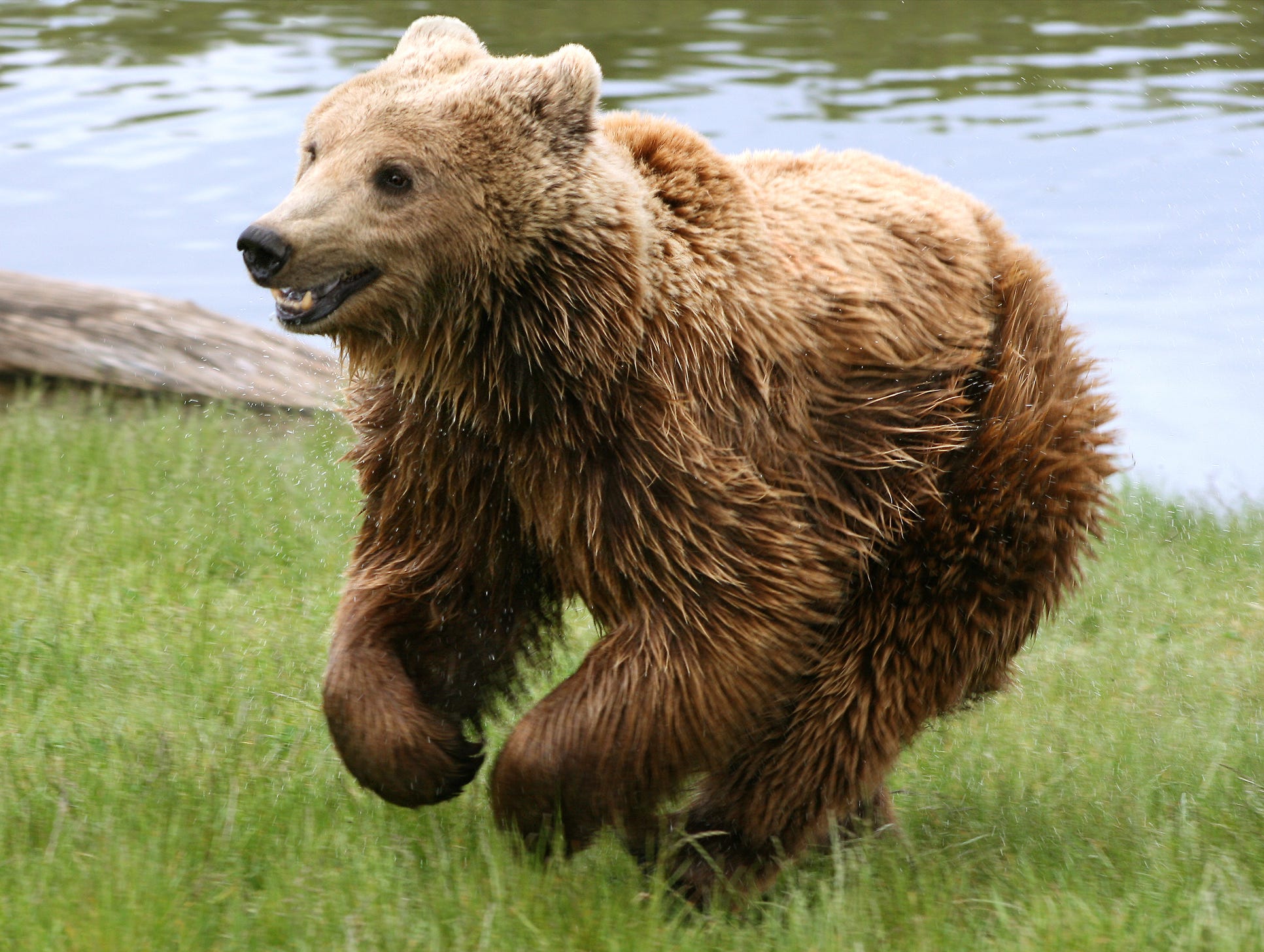
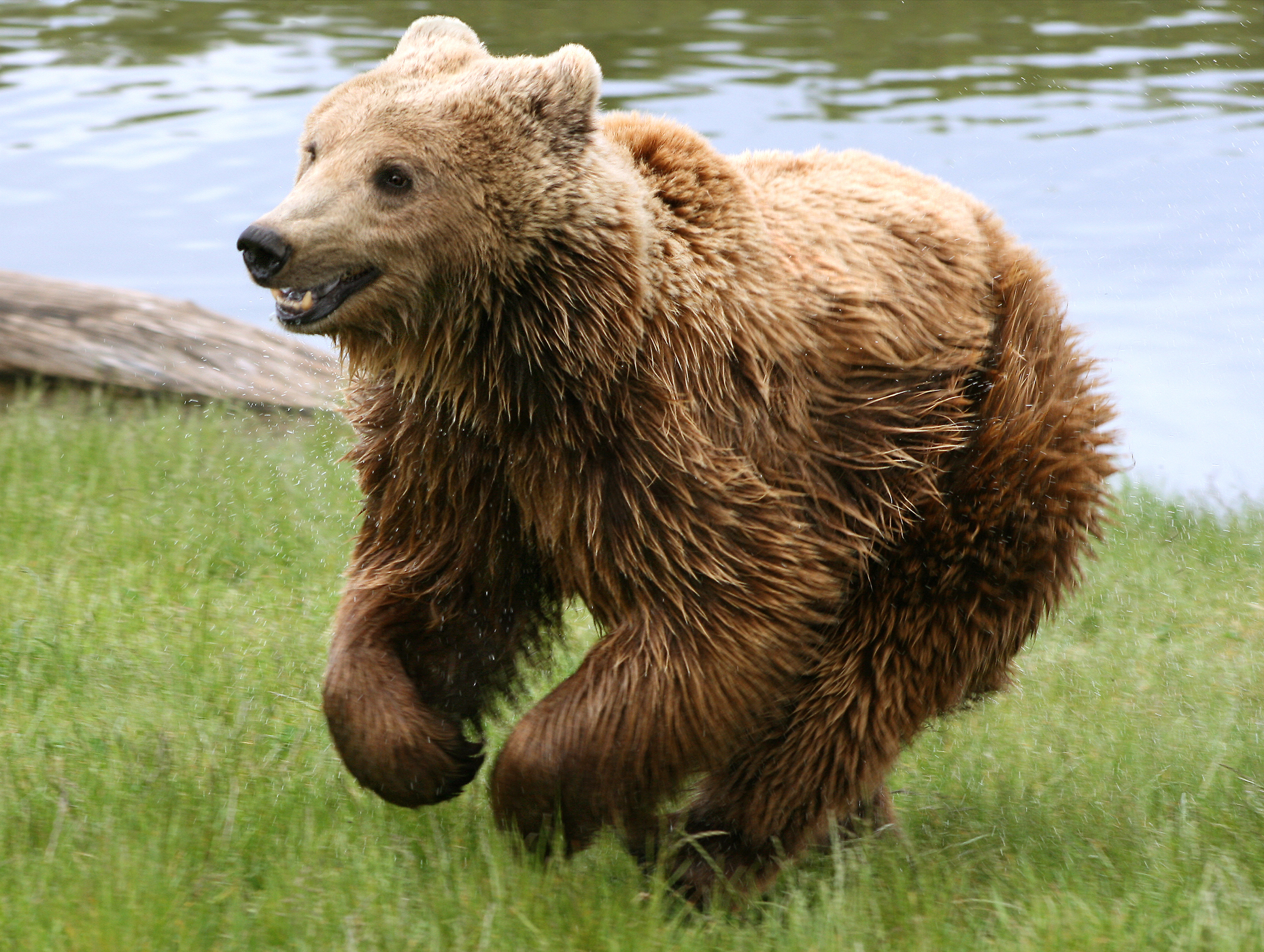
The title is not an exaggeration. Today, I am going to highlight one of my favorite evolutionary phenomena of all time, divergent evolution, using one of my favorite animal families of all time, the bears (Ursidae)! Divergent evolution is when closely related species end up developing significantly different adaptations in order to meet significantly different environmental demands. Put another way, it’s when close cousins end up looking or doing very different things on account of living in very different places with very different external characteristics. A famous example of divergent evolution is that of Darwin’s finches. On the Galápagos Islands, the finch specimens Charles Darwin collected were later found to have very different beak shapes and sizes, despite all being in the same family of birds. These differences reflected the islands’ different ecosystems and corresponding food sources. For example, the large ground finch (Geospiza magnirostris) evolved a large, thick beak used to crack nuts and crush large seeds, while the green warbler-finch (Certhidea olivacea) evolved a small, sharp beak to spear insects. They’re close cousins within the same bird family, but their beaks look and behave very differently because the different food sources in their respective habitats favored very different physiological machinery. It is truly one of the most fascinating manifestations of evolution by natural selection and I believe that bears exemplify it beautifully with their extremely diverse diets.
Bears are some of the most beloved creatures with which humankind has ever come to be acquainted. With countless famous friends like Fozzie (Bear), Winnie the Pooh, and Bear (of the Big Blue House), human affection is utterly ubiquitous for these large and in-charge carnivores. They’re carnivores. Right? This is where my fascination lies. Unlike the dogs (family Canidae) with 37 species, or the cats (family Felidae) with 41 species, or the squirrels (family Sciuridae) with 285 species, bears (family Ursidae) consist of only eight extant species worldwide. Eight. Most mammals can count them on two paws. Hands, if you will. And I’m willing to bet most people reading this article can only list three or four by name. Well, there’s the black bear (actually there are two species of black bear, but I assume most readers are thinking of the American black bear). Of course, there’s the grizzly bear (which is actually a subspecies of the brown bear). There’s the mighty polar bear, king of the Arctic. Everyone knows that. And then, pandas are bears, right? Right. They are. But there are four more lesser-discussed species that are equally fascinating in their own ways, not least of which is how they forage. This article is going to cover all eight extant species of bear and highlight the sheer diversity of their diets that makes them, in my opinion, one of the most remarkable examples of divergent evolution, epitomized by their dietary niches, rather than their physical features (although those are there, too!).
Before diving in, I want to make one quick note. It is common for taxa like families or even orders to consist of species that all exhibit similar general dietary behaviors. For example, all cats (41 species in family Felidae) are strict carnivores, as are all snakes (more than 4,170 species in suborder Serpentes), while nearly all rabbits and hares (more than 60 species in family Leporidae) are strict herbivores (some hares occasionally scavenge). This trend is not a hard and fast rule, but it is a trend, nonetheless, and it’s a great heuristic. Heck, there are more than 500 extant species of shark across thirteen orders, and nearly all of them are strict carnivores (with one or two bizarre exceptions worthy of their own spotlight articles). This is why it is so bloody fascinating to me that a mere eight species of bear encompass an astonishingly comprehensive range of dietary niches. They really do eat it all. Without further ado, let’s get into the meat and potatoes (pun intended).
1. The polar bear (Ursus maritimus)
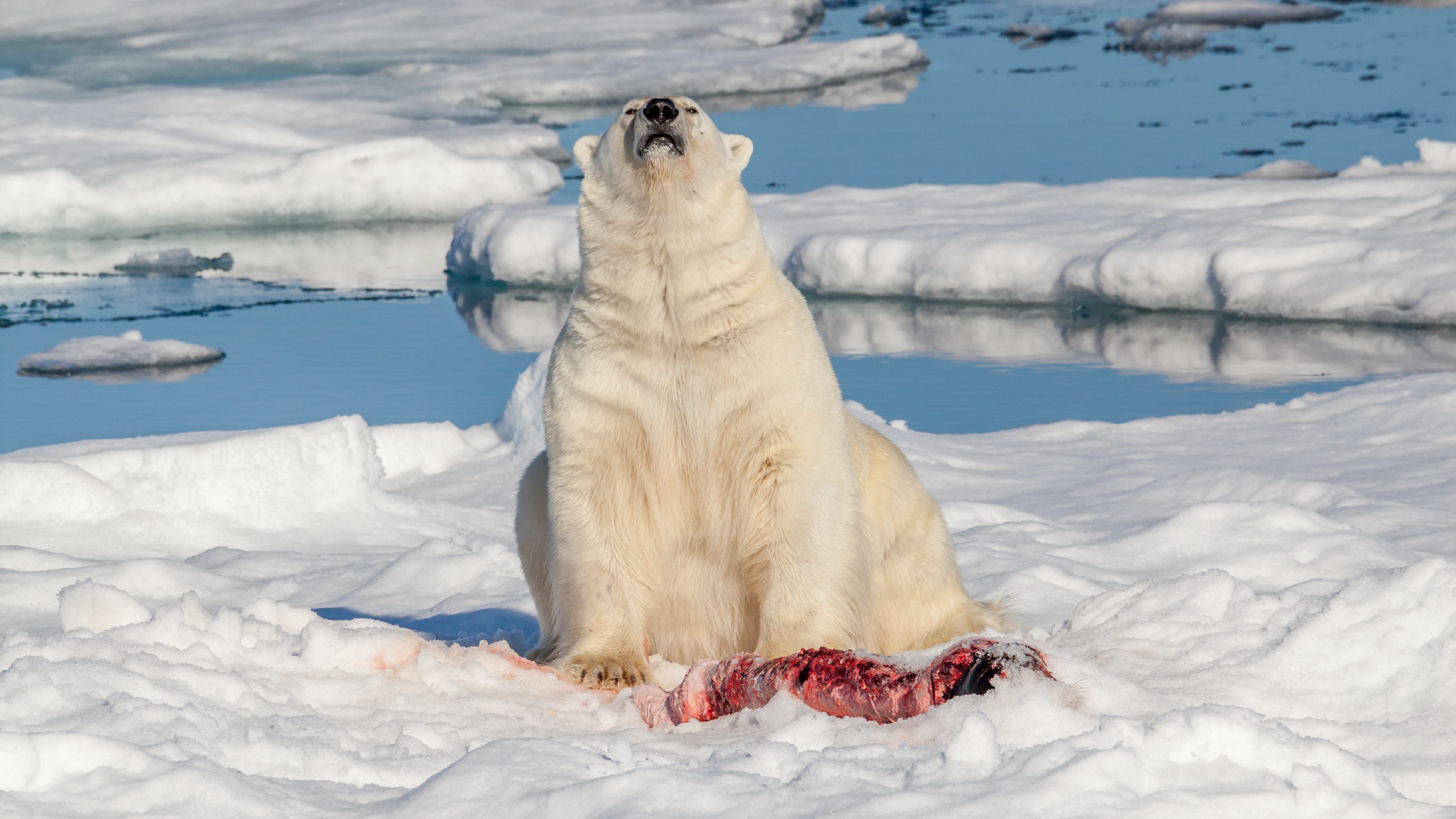
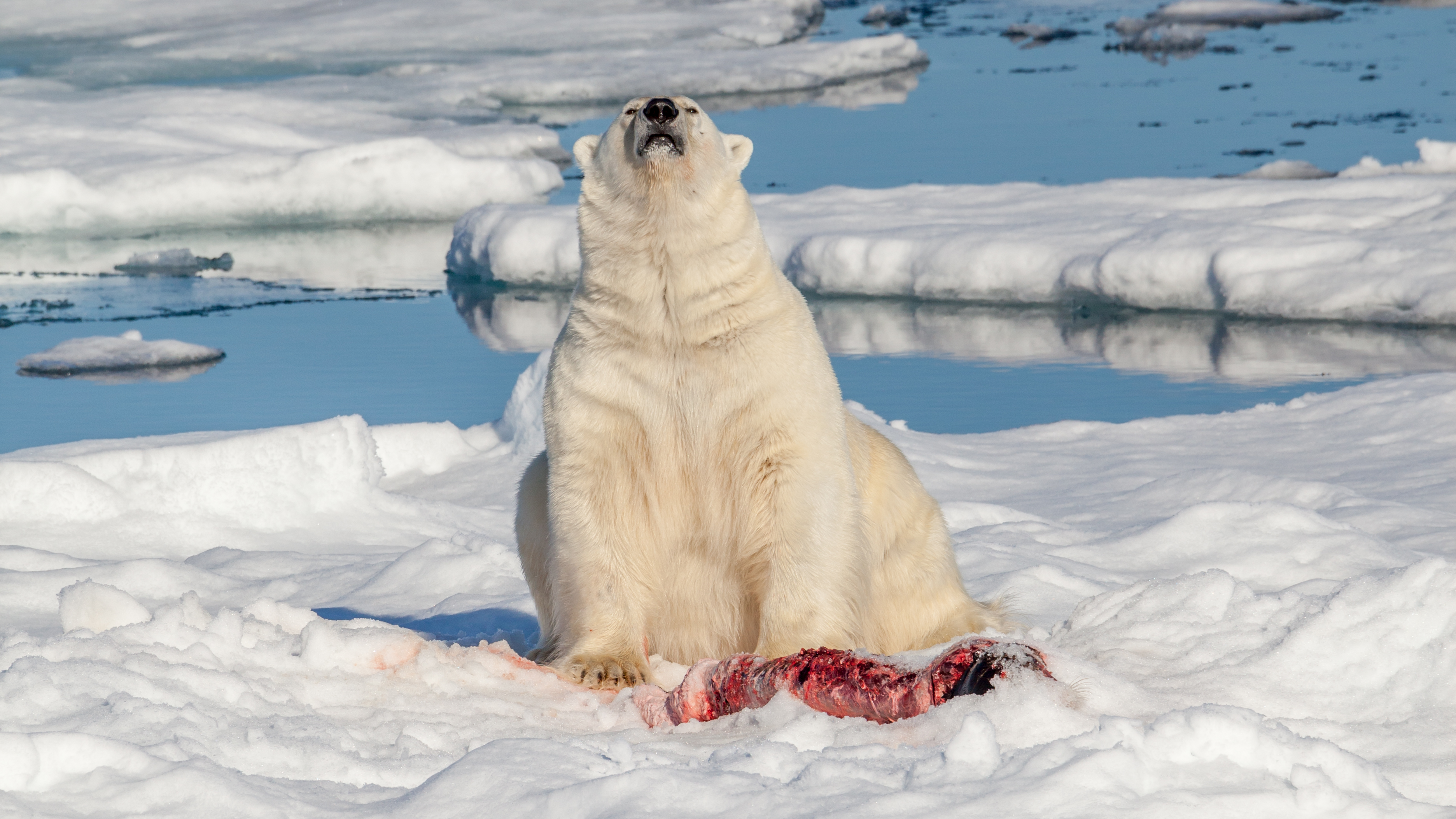
Perhaps the most intuitive example of a carnivorous bear is the beloved polar bear. Polar bears live overwhelmingly in the Arctic, where vegetation is extremely scarce. Naturally, this requires polar bears to eat animals to survive, which tend to primarily be seals. Polar bears typically hunt by using sea ice as a platform on which they wait for, approach, or ambush surfacing or resting seals. In the Canadian High Arctic, for example, samples of polar bear adipose tissue revealed that the majority of their diet consisted of ringed seals and bearded seals, with beluga whales representing significant dietary components as well, and the more dangerous walruses and narwhals representing much smaller but nonetheless present food sources. Similarly, scat analyses (literally studies of the contents of bear poop) of polar bears from the Norwegian archipelago of Svalbard reveal frequent occurrences of seals (namely ringed seal), birds, reindeer, as well as terrestrial plants and marine algae. That last bit is important. Polar bears are overwhelmingly carnivorous. They are apex predators (predators at the top of their food chain with no natural predators themselves) and dominate arctic ecosystems. But they are still bears. And bears are dietary generalists! Not to spoil the coming sections, but most bears eat mostly plants! This contrasts them sharply from cats, which, almost without exception, are hypercarnivores due less to environmental conditions and more to their inherent biology. Indeed, research suggests that all cats (family Felidae) are obligate carnivores due to their unique biological and physiological characteristics that make it difficult for them to meet key nutritional requirements from plant matter. Therefore, the fact that polar bears will occasionally consume plant matter with nonnegligible frequencies illustrates something utterly fascinating about the bear family: they are elite mammalian generalists capable of surviving by eating whatever most benefits their survival across highly diverse habitats. They are not subject to the same biological constraints as cats that force them to eat almost nothing but meat. And that, to me, is pretty darned cool. Before we move on, I should point out that cats do occasionally consume plant matter, both accidentally and intentionally, but leading hypotheses generally argue that this is largely done to facilitate hairball production, to counter diseases and parasites, or to combat starvation when prey availability is extremely low. There are always exceptions, and such exceptions are what make evolution by natural selection so darned fascinating. Rules are often broken in utterly intriguing ways.
Before moving on, it is worth mentioning that, despite being ferocious blubber-binging apex predators of the north, polar bears are quite specialized in that they depend on the presence of sea ice to hunt. This makes them rather unique among bears. While climate change threatens all life on planet earth in some way or another, the effects are much more direct and salient for creatures that depend on a healthy abundance of ice in the colder regions of the world. And there is no mistaking it: Anthropogenic (human activity-caused) climate change unequivocally reduces sea ice quantity in the Arctic, and this makes it categorically more difficult for polar bears to hunt seals. Our big, blubbery friends are in a pickle and, in my opinion, represent as good a reason as any to support global climate action initiatives. I’m not a climatologist and I don’t want to go off on too much of a tangent, but I just felt the need to call that out while on the topic of polar bears.
2. The giant panda (Ailuropoda melanoleuca)
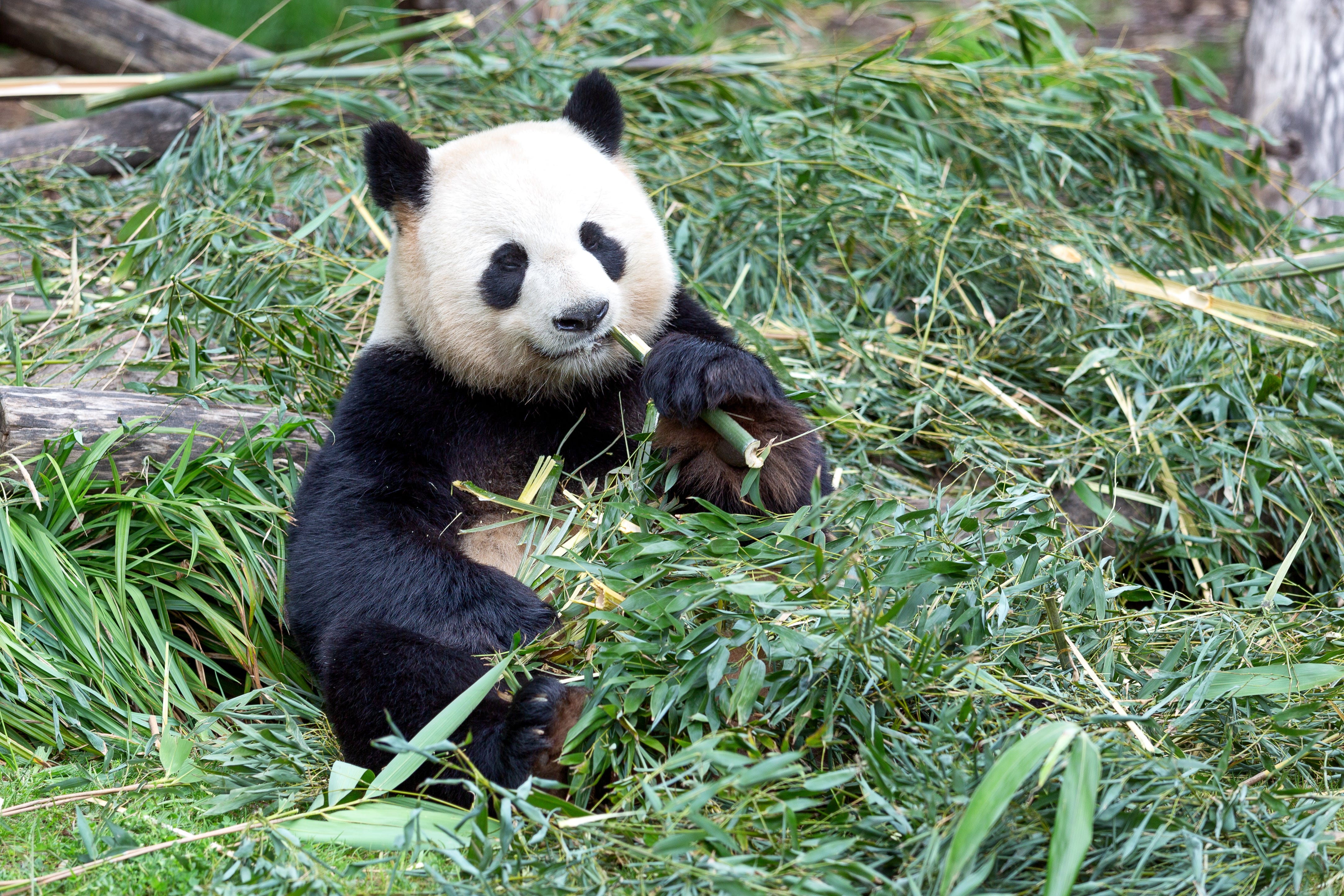

Unlike the koala and the red panda, the giant panda, endemic to China, actually is a bear. And bears are members of the order Carnivora, which includes most famous mammalian carnivores, such as wolves, tigers, seals, raccoons, weasels, and hyenas, to name a few. While most members of this order are some flavor of meat-preferring omnivore (with a good chunk of pure carnivores in the mix), giant pandas stick out like a sore thumb as one of the only predominantly herbivorous species, with 99% of their diet being bamboo (red pandas actually share this distinction with them!). Indeed, giant pandas are perplexing examples of obligate herbivores in an otherwise carnivorous lineage, with bamboo shoots and leaves comprising the vast majority of their diets. This means that they are adapted to almost exclusively eat plant matter and must do so to survive, even though said plant matter is almost entirely bamboo. Irrespective of their placement within the bear family, simply being an overwhelmingly herbivorous member of the order Carnivora, a clade literally named for the largely meat-based diet of its constituents, is a remarkable example of divergent evolution in and of itself. What makes this phenomenon even more intriguing is that the specific diet they’ve adopted actually matches the macronutritional profile of a carnivore diet. Put another way, pandas literally found a way to obtain a carnivore-like macronutrient profile from bamboo. They are basically what you’d get if a natural carnivore wanted to be a vegan. That’s not quite right, though, because despite their diet being 99% bamboo, the remaining 1% will occasionally feature eggs and fish. Like I said, there are always exceptions! And with that said, bamboo is not a particularly energy-rich source of nutrition, and pandas therefore must eat approximately 22 to 66 pounds of it a day to survive. Recent research on both captive and free-ranging pandas found that their field metabolic rate (the amount of energy used by an animal on a daily basis) is nearly as low as that of sloths! This is actually hilarious when we consider the common name of the next bear we will be talking about.
3. The sloth bear (Melursus ursinus)
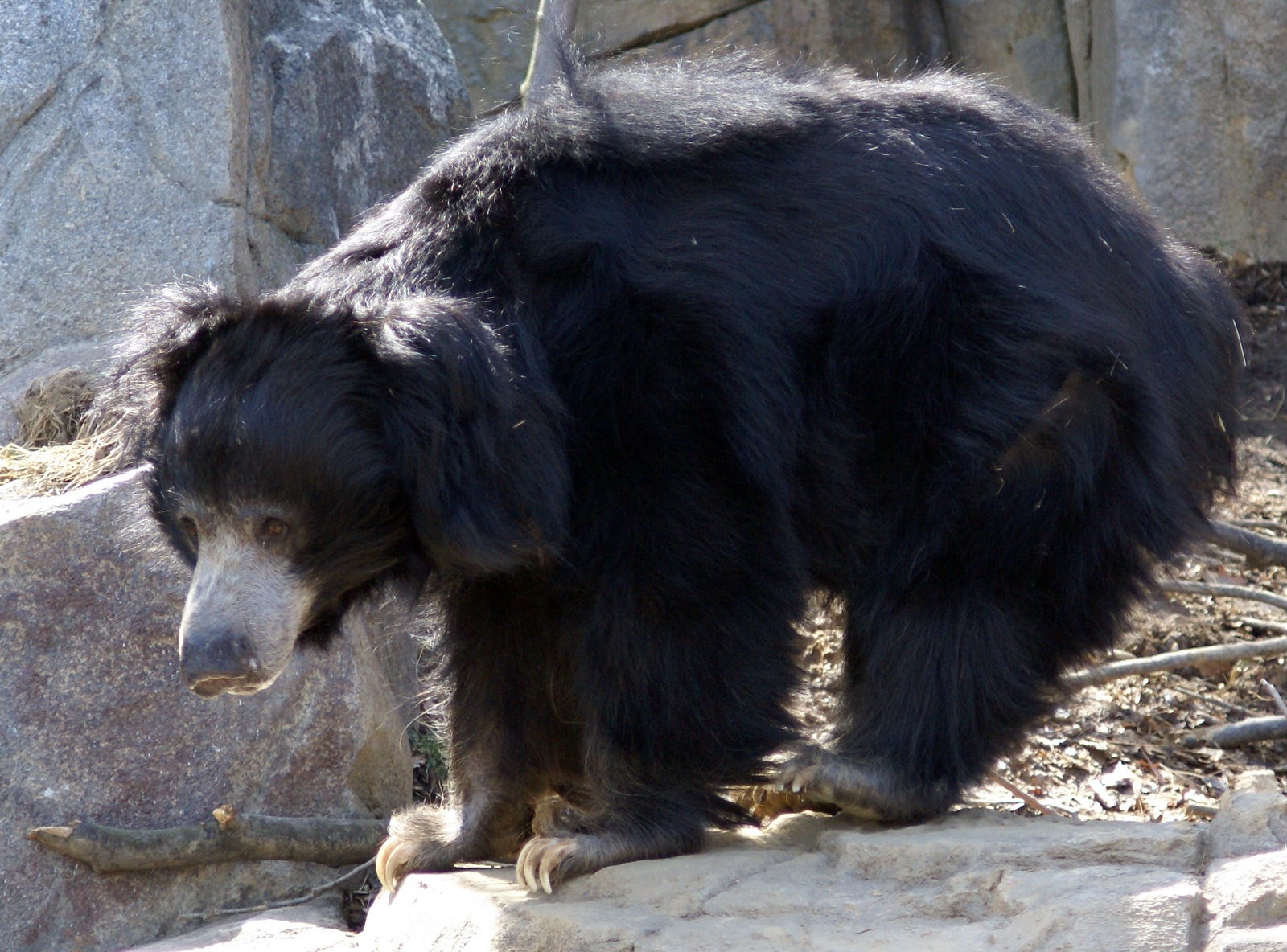

See what I did there? Finally, we are getting into bears with which most readers are unlikely to already be familiar. I absolutely adore sloth bears, and not just because Baloo from Rudyard Kipling’s The Jungle Book (1894) is one of them! Inhabiting the Indian subcontinent, as well as parts of Sri Lanka, Nepal, and Bhutan, the sloth bear is a termite specialist! To be more precise, sloth bears eat mainly termites, ants, beetles, and bees, with fruit also playing an important role, especially during the summer when it is more abundant. Indeed, sloth bears eat enough fruit that it would be a stretch to call them full-blown insectivores. But what makes them stand out to me is how they feast on their insect prey. Sloth bears use their large paws and long claws to violently dig up termite mounds, and there is even some observational evidence that the bears actually use rain to their advantage by digging in tandem with rainwater softening the ground. Perhaps they are smarter than the average bear (again, pun intended)! But they don’t just dig. They also suck. Literally. Upon opening up a termite mound, they can be heard loudly sucking and blowing to hoover up the tasty grub below, similar to the foraging strategy often employed by anteaters. And this, my friends, is an example of convergent evolution, which is the opposite of divergent evolution. Convergent evolution is when distantly related species develop similar evolutionary adaptations in response to similar environmental demands. The sloth bear has developed a feeding strategy that uncannily mirrors that of anteaters, which are not Carnivorans and are instead in a completely different order, Pilosa (which also includes sloths!), in part due to the abundance and centrality of termites as a food source in these animals’ natural habitats. Absolutely remarkable.
Although we are primarily interested in diet, there is one other noteworthy characteristic of sloth bears I’d like to address. Sloth bears are known for being one of the most aggressive bear species. However, weighing in at only 176 to 320 pounds in the larger males, they are smaller than male Bengal tigers, which weigh between 440 and 570 pounds. And while tigers do occasionally prey on sloth bears, there is a growing body of video evidence documenting sloth bears aggressively fighting off tigers to defend against predation, with only about 9% of interactions resulting in the bear’s death. Most animals have antipredator defense mechanisms, but in southern Asia, tigers are the absolute apex. There is something almost poetic about a comparatively small, bug-eating bear surviving more than 90% of the time in efforts to drive away a hungry tiger.
4. The sun bear (Helarctos malayanus)
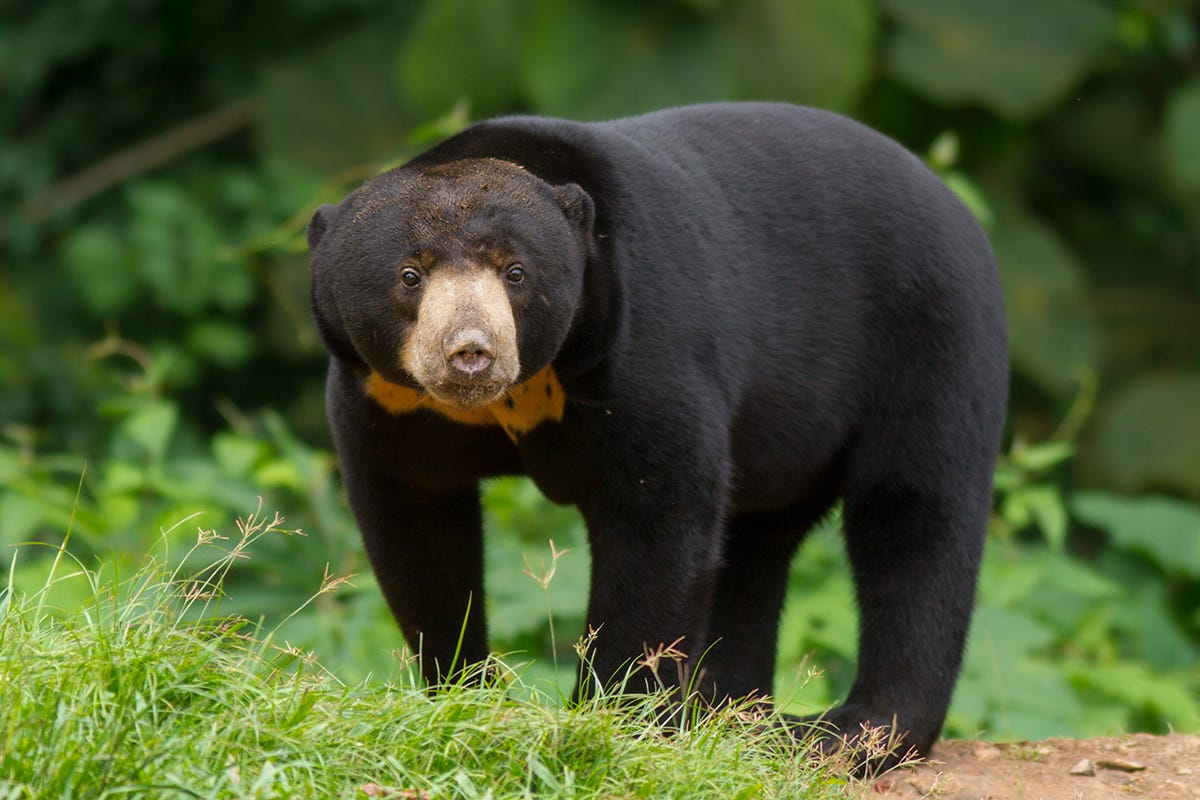

We’ve already discussed the largest bear in the world, the polar bear, topping out at around 1,700 pounds. The sun bear, by contrast, is the world’s smallest bear, weighing about 55 to 143 pounds. Yeah, I am larger than the sun bear. These tiny bears are native to the tropical rainforests of Southeast Asia and are the most arboreal (tree-dwelling) of all extant bear species! So far, we have a bear that eats large marine mammals (the polar bear), a bear that eats like a vegan and acts like a sloth (the giant panda), a bear that eats like an anteater and acts like one too (the sloth bear), and now we have a bear that acts like a squirrel, and is also closer in size to a squirrel than any other bear! Indeed, sun bears love to both sleep and sunbathe way up in the trees. But what do sun bears eat? In typical generalist fashion, sun bears are omnivores that consume a range of insects (beetles, termites, ants, etc.) and plants (mostly figs), with a few other fruits thrown in for good measure. Vertebrate prey is a lot rarer, but when it shows up, it usually takes the form of tortoises, small birds, and other small reptiles or mammals. What’s interesting about their fruit–insect duality is that during mast-fruiting periods, during which fruit availability skyrockets, fruit may constitute close to 100% of the sun bear’s diet. Between these periods, however, the sun bear becomes predominantly insectivorous, only taking fruit where available. These mast-fruiting periods aren’t exactly times of year, but rather cycles of plant reproduction that occur every few years, creating brief stretches of extraordinary fruit abundance, during which sun bears waste no time, and dominate their diets with said fruit! So, these little rapscallions sleep and sunbathe in trees, and deftly adjust their diets to thrive during dramatically diverse periods and conditions of food availability. Talk about adaptability!
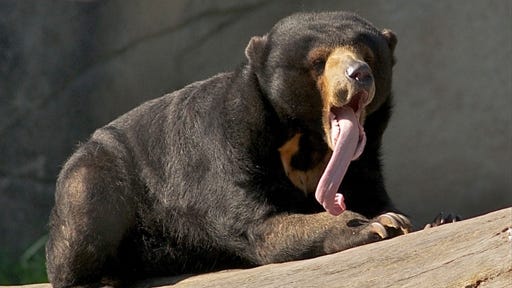
If there is to be a metaphorical cherry on top of this cake, it would be sun bears’ long, goofy-looking tongues. Although fruit occasionally dominates the diet of the sun bear, they are biologically endowed with the long, sticky tongue (longest of all the bears!) of an insectivore. This tongue is used in concert with their disproportionately massive claws to, like their sloth bear cousins, dig and tear open the dwellings of ants and termites, and then slurp ’em all up! And also, as was the case for the sloth bear, the sun bear’s claws are powerful and not to be trifled with. There is at least one reported incident of a tiger, a known predator of sun bears, being killed in an altercation with a sun bear that resulted in the death of both combatants. Yeah, these tiny bears are tough prey, but prey nonetheless for tigers, and much less commonly, leopards and dholes (awesome Asian wild dogs!). Such is to be expected for such a small bear, but they’re still absolute masters of adaptability and survival in a competitive and dangerous ecosystem!
5. The spectacled bear (Tremarctos ornatus)
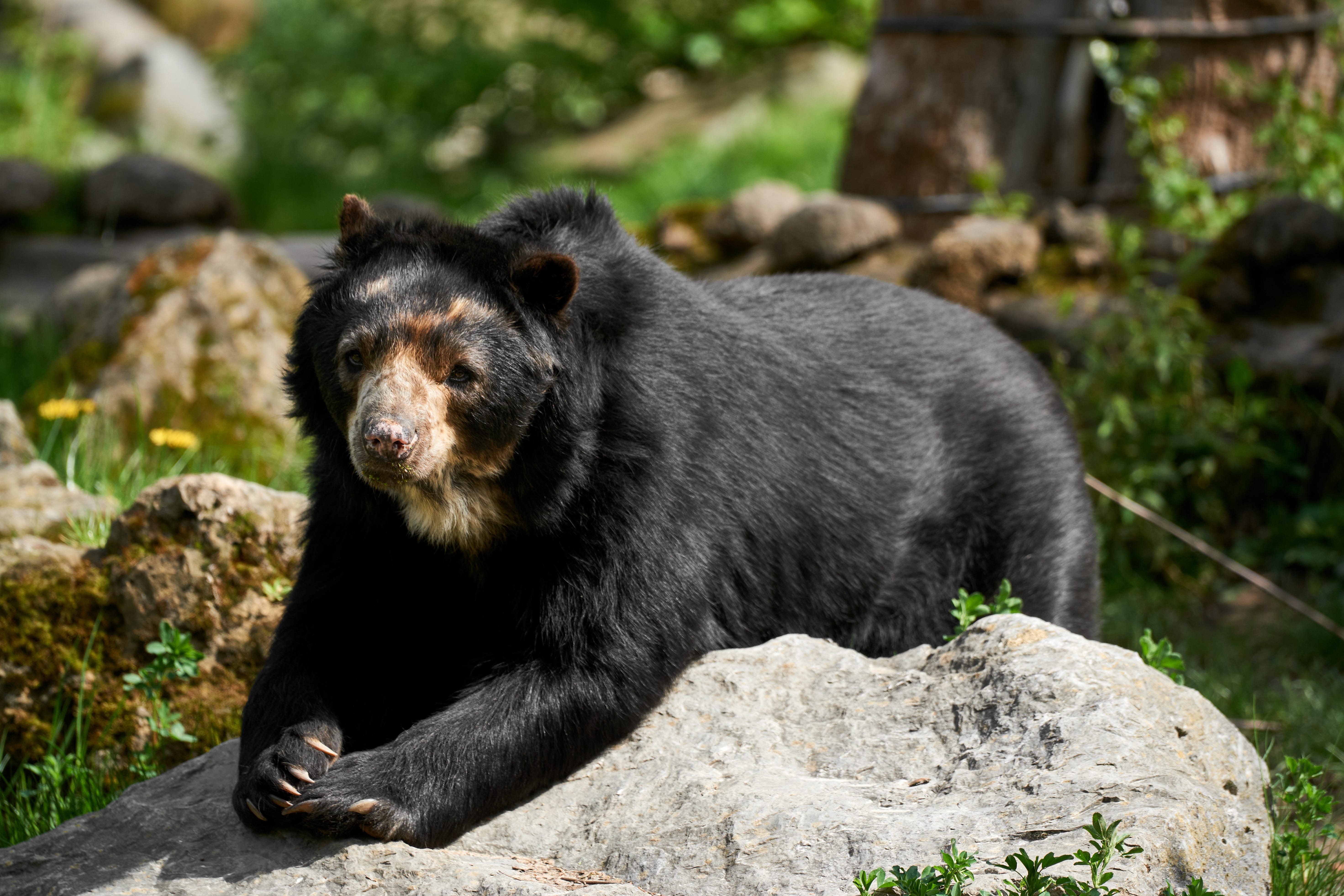

Also known as the Andean bear, the spectacled bear is the only extant bear species in South America. They also have the remarkable distinction of being the sole living member of the famous lineage of short-faced bears (subfamily Tremarctinae), which included the now extinct giant short-faced bears of the genus Arctotherium, which itself contained the largest bears ever known to have existed. Yeah, the spectacled bear has extinct cousins, such as Arctotherium angustidens, the South American giant short-faced bear, that stood up on its hind legs at 11 feet tall, and with one specimen weighing between 2,167 and 4,500 pounds. Yeah. They were absolutely gigantic. But enough with the paleobiology! Let’s talk about our featured, spectacled friend! Spectacled bears are definitely short-faced, but they are not giants, weighing in at around 75–386 pounds, with males being on average about a third larger than females. They are about 4 to 5.7 feet long, or roughly 3 feet 11 inches to 5 feet 8.5 inches in head–body length.
Compared to most extant bear species, the spectacled bear is among the most herbivorous, surpassed in vegetarian tendencies only by the giant panda. The vast majority of the spectacled bear’s diet consists of plant matter, namely bromeliads, cactuses, palm nuts, and tree fruits. Only about 4-5% of spectacled bear droppings contained animal matter, and even then, prey items were mostly insects, rodents, and occasionally larger prizes such as domestic goat, domestic cattle, and deer. So, although they are primarily herbivorous, and predation tendencies are generally low, there exists at least one documented video record of a spectacled bear attacking an adult mountain tapir, which typically weighs between 300 and 551 pounds, but the outcome of the altercation was not confirmed. This incident was likely, at the very least, a predation attempt, and may help explain past findings of mountain tapir hair in spectacled bear droppings. This, right here, is the type of science that utterly enraptures me. Researchers are careful not to overclaim that spectacled bears are definitive predators of mountain tapirs. But with two pieces of supporting evidence (mountain tapir fur in spectacled bear dung and video evidence of a spectacled bear attacking a mountain tapir), it becomes likelier that these bears might be occasional predators of large ungulates. It’s like assembling clues to solve a mystery! And considering that spectacled bears are mostly herbivorous, this is exactly the type of sleuthing science needs to shine a light on that rare but nonetheless important hidden corner of spectacled bear ecology!
So, that’s the spectacled bear! It is mostly herbivorous, but like the opportunistic generalist it is, it’s also liable to surprise us by occasionally exhibiting carnivory, and possibly even outright preying on large ungulates like mountain tapirs (but more evidence is definitely needed!). And hey, who couldn’t love Paddington?!
6. The Asian black bear (Ursus thibetanus)
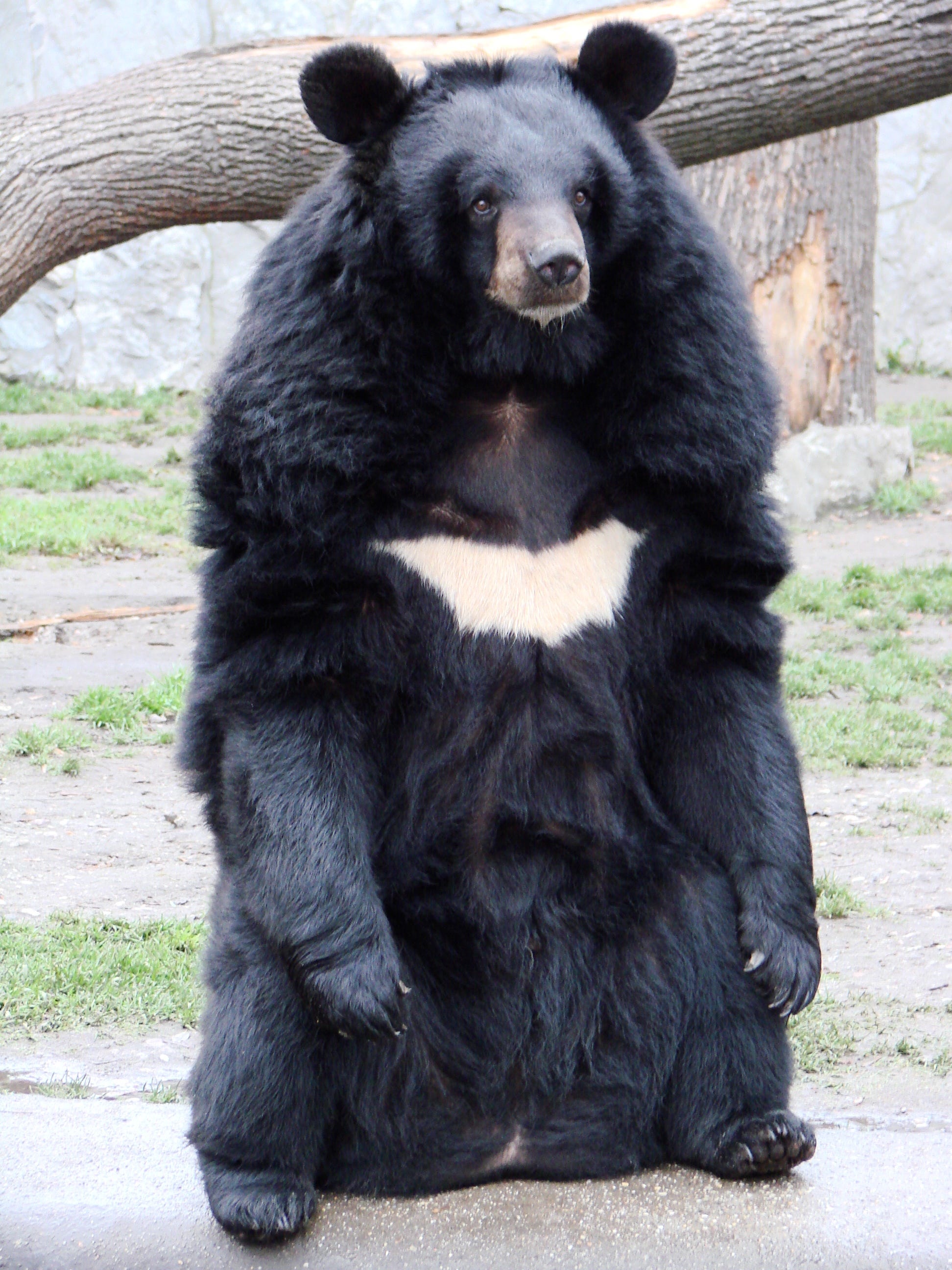
Also known as the Asiatic black bear, the moon bear, and the white-chested bear, the Asian black bear is the closest cousin to the more familiar North American black, brown, and polar bears (they are all species in the genus Ursus). Going forward, I’m going to call it the moon bear because it’s an adorable common name, it’s less of a mouthful, and look at that little half-moon on their chest! It’s the perfect moniker.
There is a legitimate argument to be made that moon bears might be the ultimate omnivores within Ursidae, although our final two entries may give it a run for its money. A recent quantitative review of moon bear dietary variation, using 29 cases from 25 scat analysis studies, revealed that their diets are strongly shaped by the season. During the springtime, they lean hard on green vegetation, flowers, bamboo shoots, and hard mast (such as nuts and acorns). During the summer, their diets shift towards green vegetation, soft fruits, and invertebrates. In autumn, moon bears focus more on soft and hard mast, especially nuts and acorns, to fatten up on calorie-dense foods before winter. Speaking of which, winter is where things get a bit more complicated. Depending on geography, some moon bears hibernate, and some do not. Specifically, those inhabiting colder, more northerly regions of their range such as Russia, Japan, northeast China, South Korea, and the high-altitude Himalayas, will often hibernate during the winter. Non-hibernating moon bears in East Asia and India will often continue to eat hard and soft mast from the preceding autumn, and some in India, Pakistan, and Iran will also eat langurs (monkeys), livestock, and cultivated fruit. Quite the diverse diet, indeed!
Moon bears have a very strange relationship with carnivory, which seems to be almost exclusively opportunistic. In 2024, for example, documented video evidence emerged of a moon bear preying on an adult female sika deer caught in a leg-hold snare trap, but calling it outright predation feels like a bit of a stretch to me. The deer was already immobilized by the trap, but it was still alive, so the bear had to at least put some effort into killing and eating the deer. Importantly, moon bears preying upon adult sika deer that haven’t already been immobilized by human-set traps is exceedingly rare and not thought to be a consistent, established behavior of theirs. Indeed, the vast majority of animal matter documented as somewhat routine food sources for moon bears consists of insects, and insects alone, per a 2019 study. As I’ve said twice before, there are always exceptions! And as an omnivorous species that eats mostly plants, a handful of insects, and small vertebrates on rare occasions when the opportunity presents, moon bears are among the bear-iest bears to ever bear!
7. The American black bear (Ursus americanus)
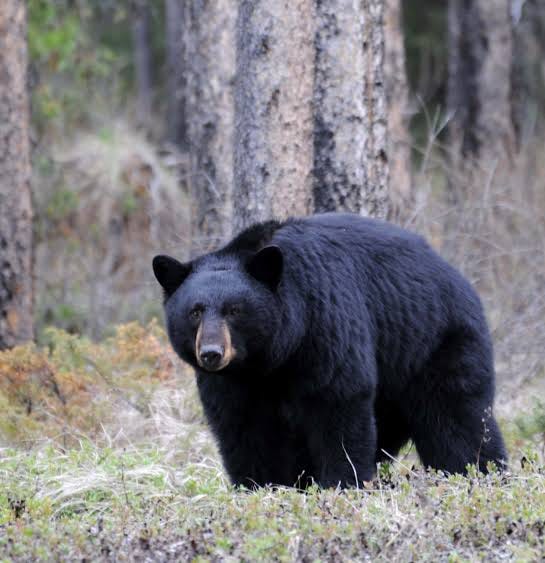

To most readers, this will likely be one of the most, if not the most familiar species on our list. American black bears are one of only two extant bear species inhabiting the contiguous United States, joined only by brown bears in small patches of the northwest and intermountain stretches. Scattered across patchy but large pockets within the lower 48 and Mexico, as well as in much denser concentrations across most of Canada and Alaska, the American black bear weighs between 130 and 660 pounds in males, and between 88 and 331 pounds in females. And if you thought Asian black bears (moon bears) were adaptable little generalists, their American cousins may want to have a word with you.
Where do we even begin? American black bears are so geographically widespread that research on their diets can generally only focus on specific swaths of their range. For example, a large study on their diet within the boreal forest of northern Ontario, Canada, revealed that black bears, in the spring and early summer, generally eat green vegetation (namely grasses, clovers, dandelions, and the like), shifting heavily into berries during mid-to-late summer, and rely most frequently on ants and wasps as animal matter, only occasionally consuming vertebrates. Vertebrate prey items included birds, fish, snowshoe hare, beaver, and moose, though the latter is almost always taken via vulnerable calves. Speaking of vulnerable calves, in parts of Canada and Alaska, black bears are often major predators, and predation studies suggest that they account for about 35% of moose calf mortality in Alaska’s Kenai Peninsula, and up to 48% of calf mortality in Saskatchewan, Canada. These findings really help qualify black bears as opportunistic carnivores, as they can be legitimate calf predators where their ranges overlap substantially with moose populations, but they are not typical predators of the much larger and more dangerous adult moose.
The situation is a bit different down south. In Louisiana’s Tensas River Basin, plants make up 85.4% of total volume, with animal matter making up 12.2%, and debris closing out the remaining 2.4%. Across summer and fall, corn was a major dietary staple, which is intriguing because such corn is a human-farmed agricultural product, not a native wild plant species. Aside from corn, black bears consumed high frequencies of blackberries, dewberries, pokeberries, beautyberries, acorns, and dogwood in summer and fall. In winter, however, they ate much higher frequencies of acorn, palmetto, grass, sedge, and herbaceous vegetation. Across seasons, beetles were consistently present, albeit in relatively low volumes within scat samples. Given that moose do not live down south, white-tailed deer featured most prominently as black bears’ most common vertebrate prey species in summer and fall, occurring in 11.8% and 6.2% of scat samples, respectively. The authors suspect, however, that these frequencies are largely attributable to fawning periods and hunting season, suggesting that deer prey is mostly either fawns (juveniles) or carrion left behind by hunters. This further supports their status as opportunistic carnivores, as adult white-tailed deer, while certainly smaller than adult moose, are still large, formidable ungulates, and thus inopportune food sources compared to their smaller, weaker fawns.
Across populations and ranges, a consistent picture emerges: American black bears are plant-loving omnivores that will always find a way to satisfy their insect cravings, and will occasionally take vulnerable vertebrate prey when opportunity knocks.
8. The brown bear (Ursus arctos)
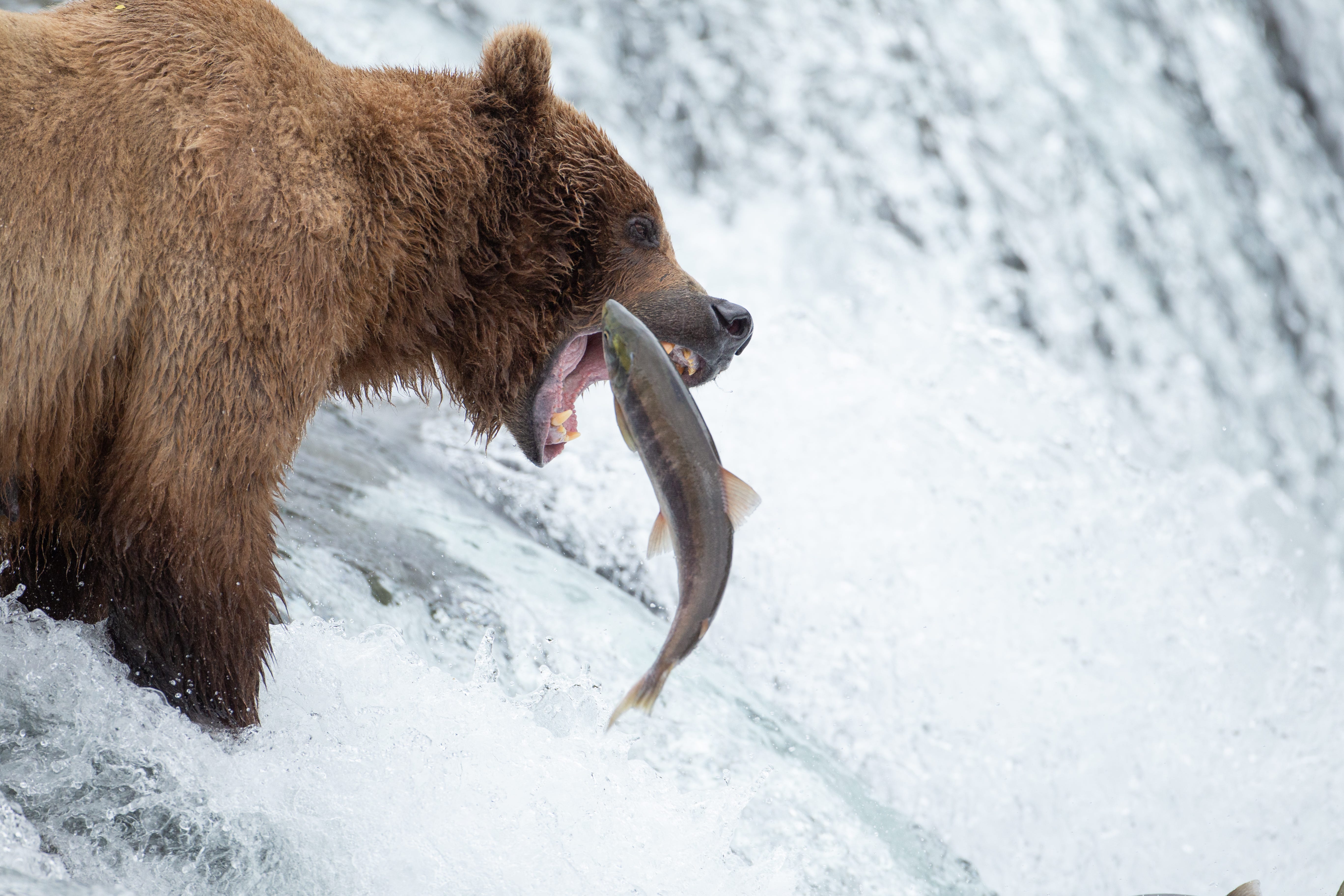

The mighty brown bear may be simultaneously the world’s most recognizable bear species and the most challenging to dietarily profile due to its unmatched distribution. Indeed, remnant populations inhabit the Greater Yellowstone and northern Rocky Mountain region, while larger populations span western and northern Canada, most of Alaska, much of Russia, parts of Northeast, Central, and Western Asia, northern Europe, and scattered pockets elsewhere in Europe. And with this remarkably global range comes remarkable dietary diversity; there are (probably) ten or more separate subspecies of brown bear, though the exact quantity is still under debate, but we can at least be confident that there are more subspecies of brown bear than there are total bear species in the entire world. And that is mindboggling if you ask me. Among these subspecies are popular favorites like the grizzly bear (Ursus arctos horribilis) and the famously colossal Kodiak bear (Ursus arctos middendorffi). To keep this from becoming a full-blown doctoral dissertation, I am only going to focus on these two subspecies, as well as bite-sized smatterings of other subspecies where applicable to profile European and Asian populations.
Let’s start with the grizzly bear. A 2014 article profiling the dietary breadth of grizzly bears in the Greater Yellowstone Ecosystem (GYE), using 11,478 scats collected across 37 years, revealed that GYE grizzly bears are extreme dietary opportunists. While multimethod analyses revealed a total of more than 266 species consumed, the foods with the highest frequencies were grasses and sedges (present in 58.7% of scats), followed by ants at 15.8%, whitebark pine seeds at 15.4%, clover at 11.9%, and dandelion at 10.9%. Elk also appeared in 8.3% of scats, as well as a number of additional plants, mushrooms, and vertebrates like mule deer and pocket gopher. These numbers tell the story of a plant-dominant omnivore, but there is a fascinating little wrinkle that adds some juicy nuance to the equation. Even though grasses and sedges dominated food frequency, they were nowhere near the most calorie-dense foods grizzlies consumed. The highest-calorie foods included army cutworm moths, ungulates (such as elk and mule deer), cutthroat trout (fish), and small mammals (such as pocket gophers). This means that, despite eating plants most frequently, their biggest nutritional jackpots came from animal matter! The study cannot establish precisely how much energy was derived from each food source, but given the caloric content of ungulates, coupled with the notable frequency of elk in scat samples, it is clear that animal prey can be a significant food source for GYE grizzly bears. There is obviously way, way more to the story, but to make a long story short, Yellowstone grizzlies are clever, opportunistic omnivores that know how and when to capitalize on prey availability and maintain their metabolisms with plant matter in the meantime.
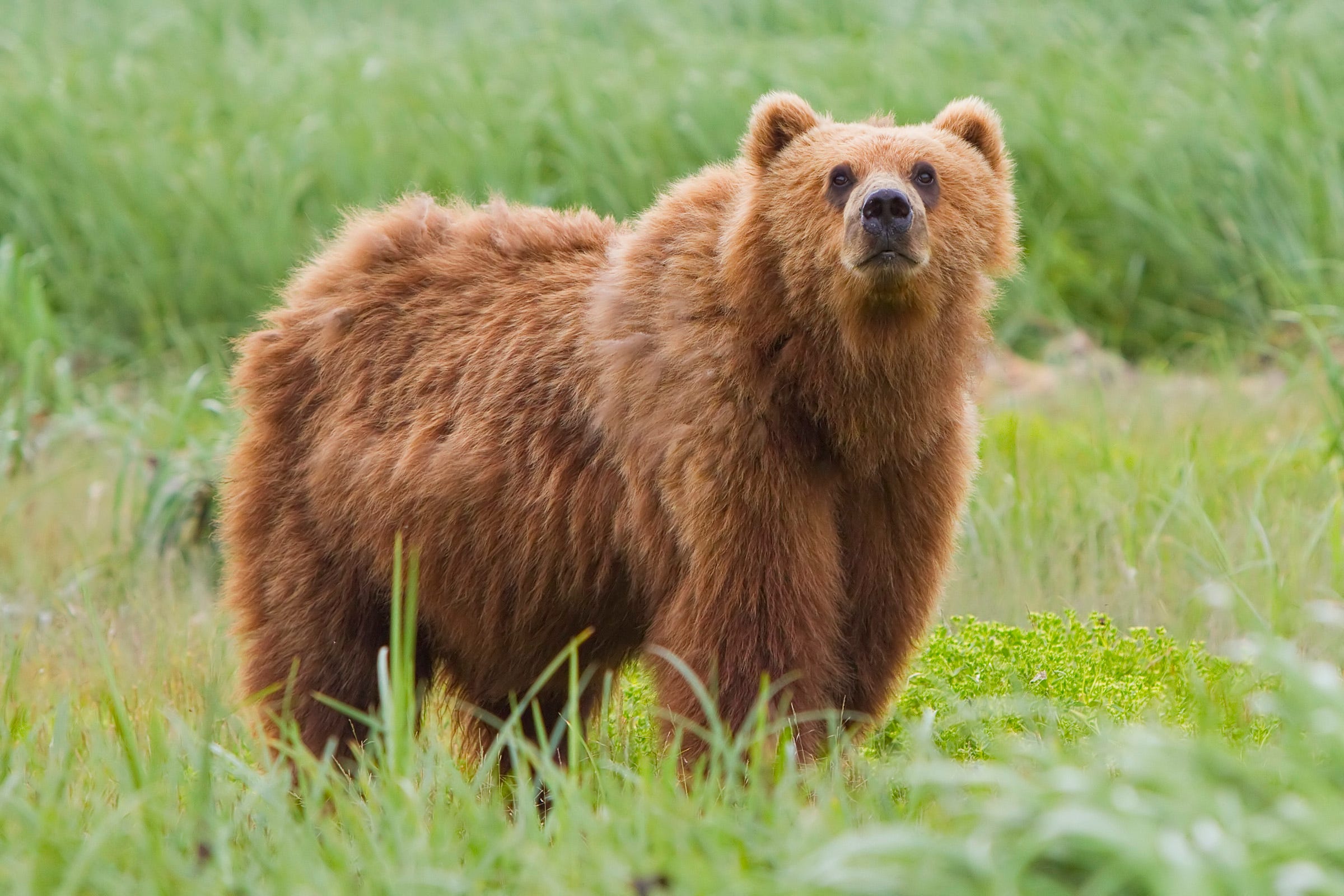

Next, I will address the elephant in the room. And by elephant, I mean the massive Kodiak bears endemic to Alaska’s Kodiak Archipelago that rival the polar bear for the title of the world’s largest extant bear. The Alaska Department of Fish & Game reports that large male Kodiak bears can weigh up to about 1,500 pounds, while polar bears weigh roughly 600-1,200 pounds, with the largest males reaching about 1,700 pounds. This makes it difficult to establish a clear “victor,” but there is enough evidence to conclude that they are generally very close in size and represent the two largest bears alive today. Okay, diet time. Kodiak bears are rather different from grizzly bears in the sense that salmon tends to dominate their diets, which helps to explain their massive size. Indeed, recent research reports that in 2015 and 2017, salmon represented upwards of 60% of Kodiak bears’ total dietary assimilation, with a brief dip down to 44% in 2016. This data paints a picture of a very different kind of brown bear. Kodiak bears are salmon-powered. And make no mistake. They are still omnivores, but because salmon run season lasts from May to November, salmon is a hugely important food source for more than half the year. But they still do eat plenty of plants! Plants actually constitute a little more than half of dependent offspring diets, but drop to about a third in subadults, about a quarter in adult females, and only about 13% in the larger adult males. This suggests that as Kodiak bears grow older and larger, they dedicate more of their foraging focus to high-calorie salmon. This also means that, more so than any other bear, Kodiaks are somewhat piscivorous bears! They’re still totally omnivores, but given that fish sometimes make up more than half of their diets, ‘part-time piscivore’ can definitely go on their resume. Just like ‘full-time herbivore’ can go on the giant panda’s resume, and ‘part-time insectivore’ can go on the sloth and sun bears’ resumes!
Okay. Home stretch. Let’s talk generally about European and Asian brown bears. I can’t possibly detail all ten (give or take) described Eurasian subspecies. So, I am going to treat this as a lightning round that hopefully coalesces into a somewhat coherent story by the end of it!
In the Sikhote-Alin mountain range of the Russian Far East, herbaceous plants, nuts and acorns, and berries dominate brown bear diets for most of the year. However, they also tear apart anthills and wasp nests, steal caches from chipmunk burrows, and prey on wild boar and red deer opportunistically, mostly during the spring. They also quite commonly track Amur tigers to either feed on their leftovers, or outright chase them off their kills! Not the most honest way to make a living, but even occasionally stealing food from the fearsome Amur tiger is pretty hardcore if you ask me.
The (unfortunately) critically endangered Marsican brown bear (also known as the Apennine brown bear) is a superb omnivore! Restricted to Italy’s Abruzzo, Lazio and Molise National Park, this subpopulation of the Eurasian brown bear (Ursus arctos arctos) primarily eats herbaceous vegetation in the spring and early summer, berries during the bulk of summertime, and hard mast (such as acorns) and fleshy fruits in the fall. But, like the omnivore generalists they are, Marsican brownies also eat noteworthy quantities of insects, mostly ants, in early summer, and wild ungulates, such as red deer and wild boar, in the spring!
Himalayan brown bears (Ursus arctos isabellinus) are also, unsurprisingly, highly omnivorous! A 2019 study found that plant matter dominated their diets, with 70% of scats containing plants only, and grasses and sedges occurring in 93% of scats, as well as accounting for about 85% of scat volume. However, despite its low frequency in scat samples, animal matter was much more important, energetically speaking! After correcting for digestibility, meat represented about 36% of dietary volume, but a whopping 54% of assimilated energy, with rodents (such as golden marmots) alone supplying about 48% of bears’ energy content. Have I mentioned that bears are expert generalists?
So that’s it! Wow, what a doozy that was. And for any pedants who might be reading this, no, they don’t literally eat everything. There are no hematophagous (blood-drinking) bears of which science is aware, though a vampire bear is definitely a cryptid I didn’t know I needed until now. There are also no planktivorous (filter-feeding) bears, though I wouldn’t be surprised if a polar bear accidentally swallowed plankton during one of its swims. But I would venture to guess that Ursidae might be the animal clade that optimally minimizes species number and maximizes dietary diversity. That’s just a guess, but if the last 5,000+ words supported by dozens of scholarly sources are anything to go by, it really does seem like a mere eight species have evolved to span close to the full spectrum of dietary niches. Little else epitomizes my love of animal science like the meandering and seemingly downright miraculous ways in which evolution by natural selection produces unintuitive oddities like the astoundingly comprehensive dietary diversity observed within Ursidae. Go bears!